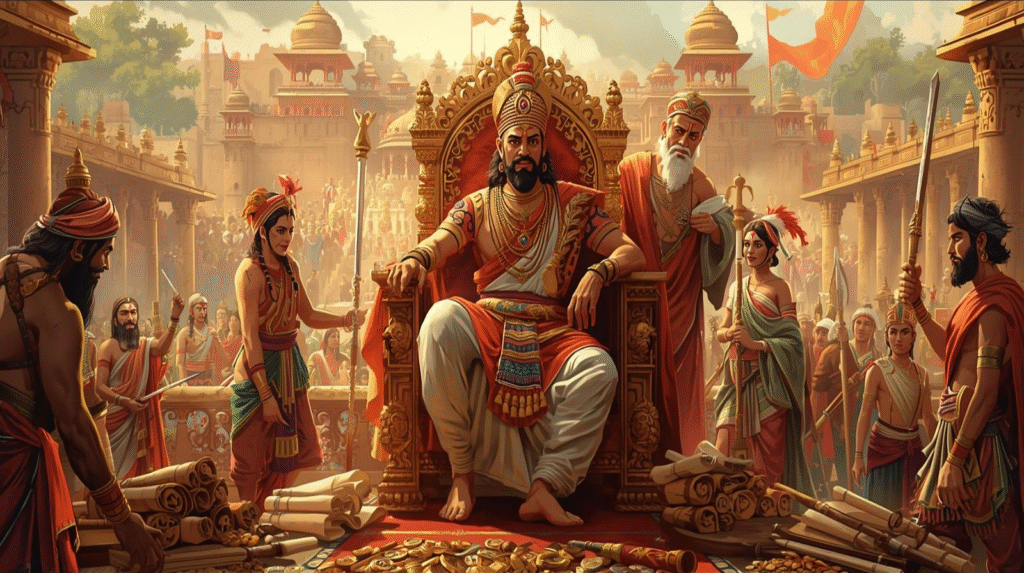
విదేశీ వాణిజ్యం మరియు మత పరిణామాలు – మౌర్యుల అనంతర భారత చరిత్ర (Part-3)

మౌర్యానంతర యుగంలో విదేశీ వాణిజ్యము   క్రీ.పూ.200 – క్రీ.శ.300 మధ్యకాలంలో భారతదేశంలో కనివినీ ఎరుగని విదేశీ వాణిజ్యము కొనసాగింది. చరిత్రకారులు ఈ కాలాన్ని వ్యాపార యుగము (Mercantile Age) అని కూడా అంటారు. చైనా, ఇరాన్, ఆగ్నేయాసియా, రోమన్ సామ్రాజ్యాలతో అత్యద్భుతమైన నౌకా వ్యాపారం జరిగింది. తత్ఫలితంగా ఈ కాలం సిరిసంపదలతో తులతూగింది. చైనాతో వ్యాపారం: క్రీ.శ.2వ శతాబ్దంలో టాలమి అనే గ్రీకు పండితుడు వ్రాసిన జియోగ్రఫీలో చైనాకు భారతదేశానికి మధ్య ఉన్న రహదారులు గురించి […]

విదేశీ వాణిజ్యం మరియు మత పరిణామాలు – మౌర్యుల అనంతర భారత చరిత్ర (Part-3) Read More »
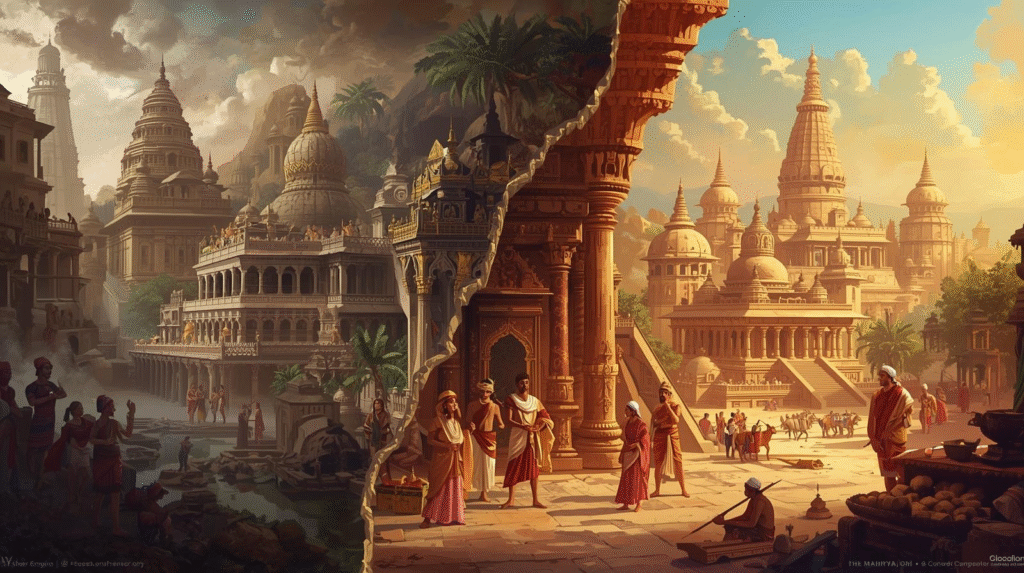
Post-Mauryan Age: Trade, Religion & Cultural Transformation (Part-3)

The Post-Mauryan Age (200 BCE – 300 CE) represents a significant phase in Indian history, marked by remarkable growth in foreign trade and notable religious developments. This period, often referred to as the Mercantile Age, witnessed extensive maritime and overland commercial exchanges with China, Southeast Asia, Africa, and the Roman Empire, which contributed to the

Post-Mauryan Age: Trade, Religion & Cultural Transformation (Part-3) Read More »

ప్రాచీన తమిళ రాజ్యాలు – చోళ, చేర, పాండ్యుల పాలన- వికసించిన సంగం సాహిత్యం

దక్షిణ భారతదేశంలోని మూడు తమిళ రాజ్యాలు ప్రాచీన దక్షిణ భారతదేశంలో చోళ, చేర, పాండ్య అనే మూడు రాజ్యాలు వెలిశాయి. వీరు తమిళ భాష మరియు సాహిత్యమును ఆదరించి అభివృద్ధి చేసినందువల్ల ఈ మూడు రాజ్యాలను  తమిళ రాజ్యాలు అంటారు. ఈ మూడు రాజ్యాల సమాచారము క్లుప్తంగా క్రింది పట్టికలో తమిళ ఇవ్వడమైనది. రాజ్యం పేరు పాలించిన ప్రాంతం రాజధాని రాజకీయ చిహ్నం గొప్పరాజు చోళ   ఉత్తర తమిళనాడు   ఉరయ్యూరు తరువాత కావేరీ పట్టణం

ప్రాచీన తమిళ రాజ్యాలు – చోళ, చేర, పాండ్యుల పాలన- వికసించిన సంగం సాహిత్యం Read More »

Tamil Kingdoms of Ancient South India: Cholas, Cheras, Pandyas & Sangam Literature

In ancient South India, three great dynasties—the Cholas, Cheras, and Pandyas—rose to prominence and shaped the region’s political, cultural, and literary identity. Collectively known as the Three Tamil Kingdoms, they ruled over Tamil Nadu and Kerala, each with its own capital, royal emblem, and legacy. These kingdoms not only established strong political foundations but also

Tamil Kingdoms of Ancient South India: Cholas, Cheras, Pandyas & Sangam Literature Read More »

మౌర్యానంతర యుగం: శుంగులు, ఇక్ష్వాకులు & స్వదేశీ రాజ్యాల వైభవం (Part-2)

మౌర్యానంతర యుగం- స్వదేశీ రాజ్యాలు   మౌర్యానంతర యుగంలో విదేశీ రాజ్యాలతో పాటుగా అనేక స్వదేశీ రాజ్యాలు కొనసాగాయి. వాటిలో ముఖ్యమైనవి: I. శుంగరాజ్యము (క్రీ.పూ.184 – 75) శుంగులు భరద్వాజ గోత్రానికి చెందిన బ్రాహ్మణులు. మౌర్యుల పాలనలో ఉన్నతాధికారులుగా పనిచేస్తూ, మౌర్యులను అంతం చేసి స్వతంత్ర రాజ్యాన్ని స్థాపించారు. మధ్యప్రదేశ్‌లోని విదిశ వీరి రాజధాని. పురాణాల ప్రకారము ఈ వంశంలో పది మంది రాజులున్నారు. పుష్యమిత్ర శుంగ ఇతను శుంగ వంశ స్థాపకుడు. చివరి మౌర్య

మౌర్యానంతర యుగం: శుంగులు, ఇక్ష్వాకులు & స్వదేశీ రాజ్యాల వైభవం (Part-2) Read More »

Post-Mauryan Age: Shungas, Ikshvakus & Indigenous Kingdoms of India (Part-2)

After the decline of the Mauryan Empire in the 2nd century BCE, India witnessed the rise of several powerful indigenous kingdoms alongside the influx of foreign dynasties. These regional powers played a crucial role in shaping India’s political, cultural, and religious landscape. Among them, the Shungas and Kanvas in North India, the Satavahanas in the

Post-Mauryan Age: Shungas, Ikshvakus & Indigenous Kingdoms of India (Part-2) Read More »

Post-Mauryan Age in India

మౌర్యానంతర యుగము- యవనులు నుండి కుషాణుల వరకు భారత చరిత్ర (Part-1)

మౌర్యానంతర యుగము/ గుప్తుల పూర్వయుగము (క్రీ.పూ.200 – క్రీ.శ.300) క్రీ.పూ.200 నుండి క్రీ.శ.300 మధ్య గల కాలం భారతదేశ చరిత్రలో అత్యంత విశిష్టమైనది. ఇది రెండు మహా సామ్రాజ్యాలైన మౌర్యసామ్రాజ్యము మరియు గుప్తసామ్రాజ్యాల మధ్య ఉన్న యుగము. రాజకీయ రంగంలో అనైక్యత మరియు అనిశ్చిత పరిస్థితులున్నప్పటికీ రాజకీయేతర రంగాల్లో అద్భుతమైన ప్రగతి సాధించిన కాలమిది. రాజకీయ చరిత్ర మౌర్యానంతర యుగంలో భారతదేశంలో అనేక విదేశీ మరియు స్వదేశీ రాజ్యాలు అవతరించాయి. ఫలితంగా  దేశంలో రాజకీయ అనైక్యత రాజ్యమేలింది.

మౌర్యానంతర యుగము- యవనులు నుండి కుషాణుల వరకు భారత చరిత్ర (Part-1) Read More »

Post-Mauryan Age / Pre-Gupta Age Explained (Part-1)

The period between 200 BCE and 300 CE is one of the most significant in Indian history. It forms the transitional age between two great empires – the Mauryan Empire and the Gupta Empire. Politically, the era witnessed disunity and uncertainty, yet in non-political fields, remarkable progress was achieved. Political History In the Post-Mauryan period,

Post-Mauryan Age / Pre-Gupta Age Explained (Part-1) Read More »

Mauryan Empire's administrative structure

చంద్రగుప్తుడు నుండి అశోకుని వరకు – మౌర్యుల పరిపాలన రహస్యాలు (Part-3)

మౌర్యుల పరిపాలన విధానము   భారతదేశంలోనే మొట్టమొదటి వ్యవస్థీకృతమైన మరియు సమర్థవంతమైన పరిపాలన మౌర్యుల కాలంలో కనిపిస్తుంది. కౌటిల్యుడి అర్థశాస్త్రము, మెగస్తనీస్ వ్రాసిన ఇండికా మరియు అశోకుని శాసనాల ద్వారా వీరి పరిపాలన వ్యవస్థ గురించి తెలుసుకోవచ్చు. కేంద్రీకృత పాలన (centralised administration) మౌర్యులు అత్యంత కేంద్రీకృత పరిపాలన వ్యవస్థను ఏర్పాటు చేశారు. సర్వాధికారాలు చక్రవర్తి ఆధీనంలో ఉండేవి. చక్రవర్తి అత్యున్నత శాసనాధికారి, కార్యనిర్వాహణాధికారి మరియు న్యాయాధికారి. అనేక రంగాలపైన ప్రభుత్వ నియంత్రణ కొనసాగింది. గనులు -ఖనిజాలు,

చంద్రగుప్తుడు నుండి అశోకుని వరకు – మౌర్యుల పరిపాలన రహస్యాలు (Part-3) Read More »

Mauryan Empire: Administration, Ashoka’s Reforms, Architecture & Decline Explained (Part-3))

Administration of the Mauryas The first well-organized and efficient administration in India was seen during the Mauryan period. Information about their administrative system is available from Kautilya’s Arthashastra, Megasthenes’ Indica, and Ashoka’s inscriptions. Centralised Administration The Mauryas established a highly centralised system of administration. All powers were vested in the Emperor. He was the supreme

Mauryan Empire: Administration, Ashoka’s Reforms, Architecture & Decline Explained (Part-3)) Read More »

error: Content is protected !!